Community science, also known as citizen science, is a way for the public to participate and collaborate in scientific research to increase scientific knowledge, usually through data collection and monitoring programs. Community science is employed for a variety of reasons: new ideas can be cultivated through networks of amateur scientists, students, volunteers, and educators. More data can be collected at a wider scale for a fraction of the cost. As a Washington State Naturalist, you can be a valuable asset in community science projects, which may include wildlife-monitoring programs, online databases, visualization and sharing technologies, or other community efforts. On this page, you can learn more about community science projects found throughout Washington.
Community Science
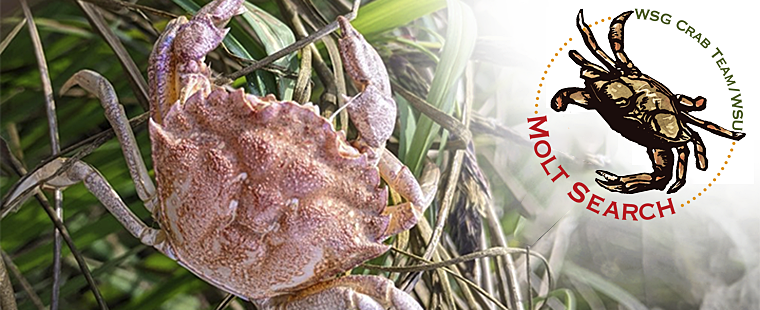
The Washington State University Extension and Washington Sea Grant have partnered on a new volunteer-based, early detection program for European green crabs called “Molt Search.” The European green crab is considered one of the world’s worst invasive species, threatening marine flora and fauna of Washington. You can attend a Molt Search training to learn how to conduct a systematic survey for crab molts, identify the European green crab and distinguish it from native crabs, how to measure the crab molts, and how to report your collected data on the MyCoast mobile app. Learn more and sign up for a Molt Search training here: Molt Search – Washington Sea Grant