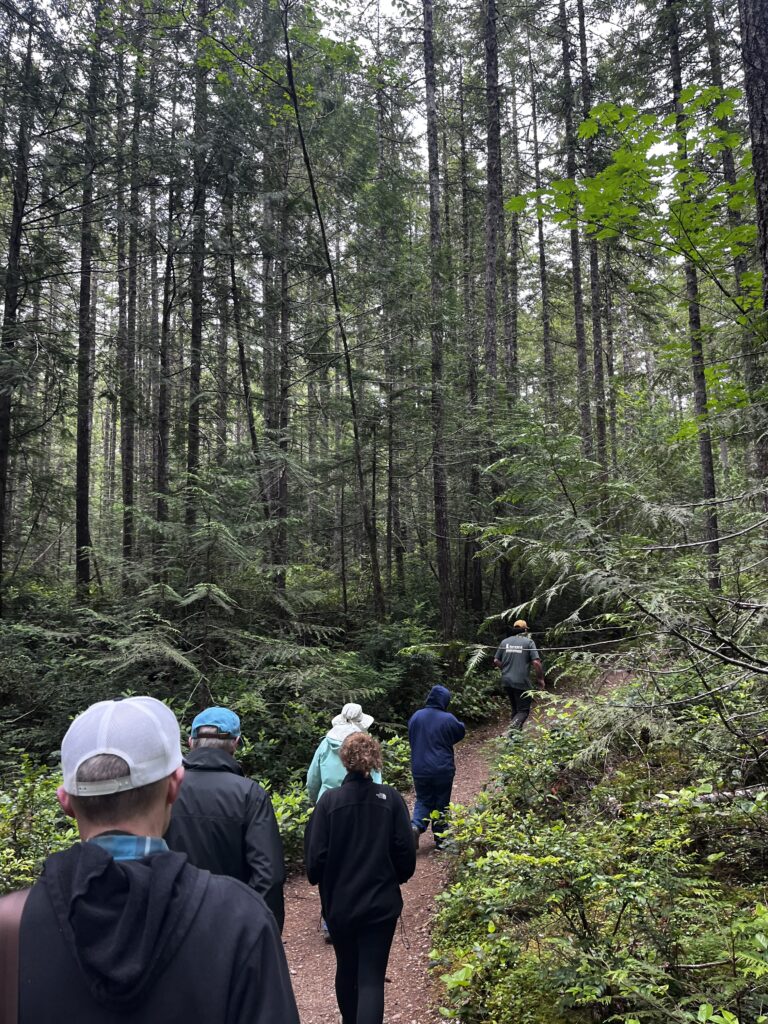
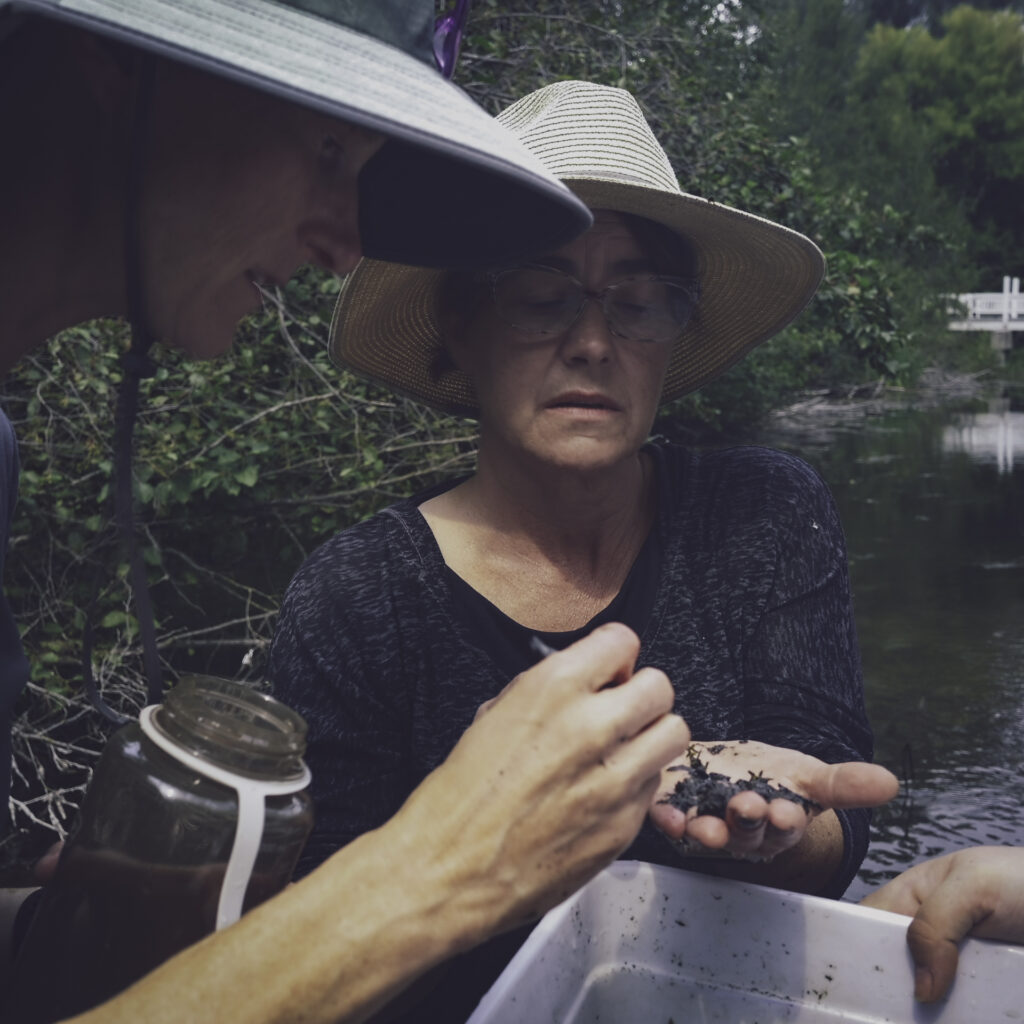
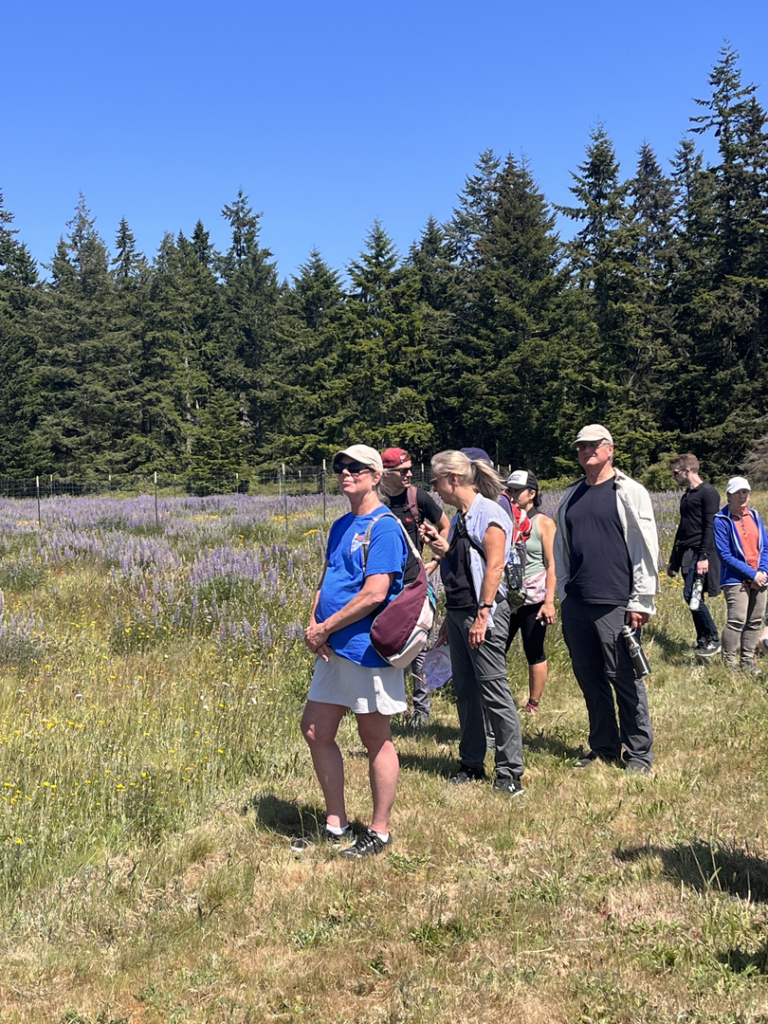
The Washington State Naturalist program aims to educate individuals seeking to volunteer with organizations doing environmental education, stewardship, and research. This is a WSU legacy-program that is a collaboration between WSU Extension and the WSU School of the Environment. The program works to increase public awareness and knowledge about the environment, conservation, scientific inquiry, and ecosystem function to promote stewardship. The program graduates will gain skills and knowledge to make informed decisions on environmental issues and be able to serve their communities as environmental educators, stewards, and community scientists. Please note, this is still a burgeoning program, so we are only able to accept applicants who can commit to volunteering with our partner organizations in select areas. We’re working to secure more partnerships statewide so that we can then offer this program to anyone in Washington.
What does the course look like?
As a Washington State Naturalist apprentice, you are starting an extensive research-based training program designed to give you a background in ecology and ecosystem management. As a Washington State Naturalist, you will have the credentials to offer your services as a volunteer to park districts, land-trusts, local jurisdictions, and environmental not-for-profit organizations. The Washington State Naturalist training consists of a series of online modules and supplemental field learning experiences. The field learning experiences include both WSU Extension-sponsored field tours and experiences independently sought out by program participants. Overall, this is a program where many people spend 100+ hours over 8 – 12 months to complete. The duration variance depends on your rate of completion of the field learning and volunteer hour requirements.
We require a total of $425 in tuition to participate. There are limited scholarships available that cover $375 of tuition. Program applicants are admitted on a first come and first approved basis, and scholarship applicants require additional consideration. You will have three days to pay your course fee and register. Applicants from our 2025 waitlist will have priority. If you are not accepted this year, you will be added to the waitlist.
Program overview
| Program Components | Component details |
|---|---|
| Cost | $325 for online learning due once accepted to program + $100 for field experience and continuing education fee due January 2027 |
| Canvas online learning requirement | Must complete 6 Canvas modules, which includes the core 4 modules and the 2 other modules of your choice |
| Field learning requirement | Must complete 20 hours of field learning |
| Volunteer requirement | Must complete 20 hours of volunteering with the partner organizations below. Volunteering can include environmental education, stewardship and/or participatory science |
| Partner organizations involved | Benton Conservation District Dishman Hills Conservancy Great Peninsula Conservancy Hood Canal Salmon Enhancement Group Mountains to Sound Greenway Trust Skagit Land Trust Spokane Conservation District Spokane County Water Resources Wenatchee River Institute Whidbey Camano Land Trust |
| Number of participants selected | 60 – 64 total, 2 – 10 per organization |
Program requirements
Core Modules
The first four modules must all be completed. They provide a foundation of Washington ecosystems and ecology, while also providing knowledge and context for scientific literacy and natural resource management. Each module may consist of WSU faculty presentations, readings from the WSU Naturalist Manual, curated videos, exercises, and other resources.
Core modules include:
- Ecosystems of Washington | Module Author: Dr. Mark E. Swanson
- Introduction to Ecology | Module Author: Dr. Gretchen Rollwagen-Bollens
- Scientific Inquiry and Methods | Module Author: Dr. Linda Chalker-Scott
- Watershed Management | Module Author: Sue Blake (retired) and Dr. Sarah Roley
Advanced Modules
The advanced modules deepen understanding of specific ecosystems. Participants need only complete two of the four advanced modules to earn their certification. Many participants find value in completing all the modules.
Advanced modules include:
- Forestry (in development) | Module Authors: Oregon State University Extension staff and faculty: Glenn Ahrens, Daniel Leavell, John Punches, Jacob Putney, John Rizza, and Thomas Stokely
- Adapted for Washington State forests by Dr. Patricia Townsend. Edited by Jacob O’Brien.
- Stream Ecology | Module Author: Dr. Katherine Strickler
- Limnology (Lake Systems) | Module Authors: Dr. Barry Moore (retired) and Dr. Sarah Roley
- Oceanography | Module Author: Dr. Gretchen Rollwagen-Bollens
Attend Zoom Meetings every other week
Each discussion section will include a review of the material in the most recent module, sharing of educational resources, and meeting others in the program from across Washington State. These 90-minute online sessions provide additional examples of concepts found in the modules and allow participants to ask questions. You will also practice talking about the topic to build confidence in presenting scientific information.
Before class, there may be additional short readings or videos on a case study relevant to the module for you to review. Examples include the Elwha River restoration, succession around Mount St. Helens, and water use in the Yakima watershed. Where feasible, we will integrate more Native American perspectives and traditional ecological knowledge (TEK) elements into the discussion. Indigenous contributions and knowledge are largely missing from the original curriculum developed over 10 years ago, and we believe Washington’s Native people should be brought to the forefront.
Field Learning
Complete 20 hours of professional and self-guided learning out in the field. Learn more at our Field Learning page.
Volunteer Commitment
Connect with a partner organization in your area to fulfill your volunteering requirement. We require WANAT participants to complete 20 volunteer hours in activities like environmental education, stewardship, and participatory science. Some administrative volunteer hours are allowed, but the majority of volunteering should involve a naturalist focus. Learn more about the partner organizations and their volunteer opportunities at our Partners page.
Where are we located?
The Washington State Naturalist Program currently operates in eight counties through our partner organizations and online through WSU Global Campus. When reviewing applications, priority is given to applicants that reside in the same county as our partner organizations. Secondary consideration will be given to those residing in an adjacent county within a commutable distance to our partner organizations. Before applying, please gauge whether you can consistently attend volunteer opportunities and trainings with the partner organization closest to you. Consider potential traffic, ferry travel, etc.
Partner organizations and their locations:
- Benton Conservation District in Benton County
- Dishman Hills Conservancy, Spokane Conservation District, and Spokane County Water Resources in Spokane County
- Great Peninsula Conservancy in Kitsap County
- Hood Canal Salmon Enhancement Group in Mason County
- Mountains to Sound Greenway Trust in King County
- Skagit Land Trust in Skagit County
- Wenatchee River Institute in Chelan County
- Whidbey Camano Land Trust in Island County
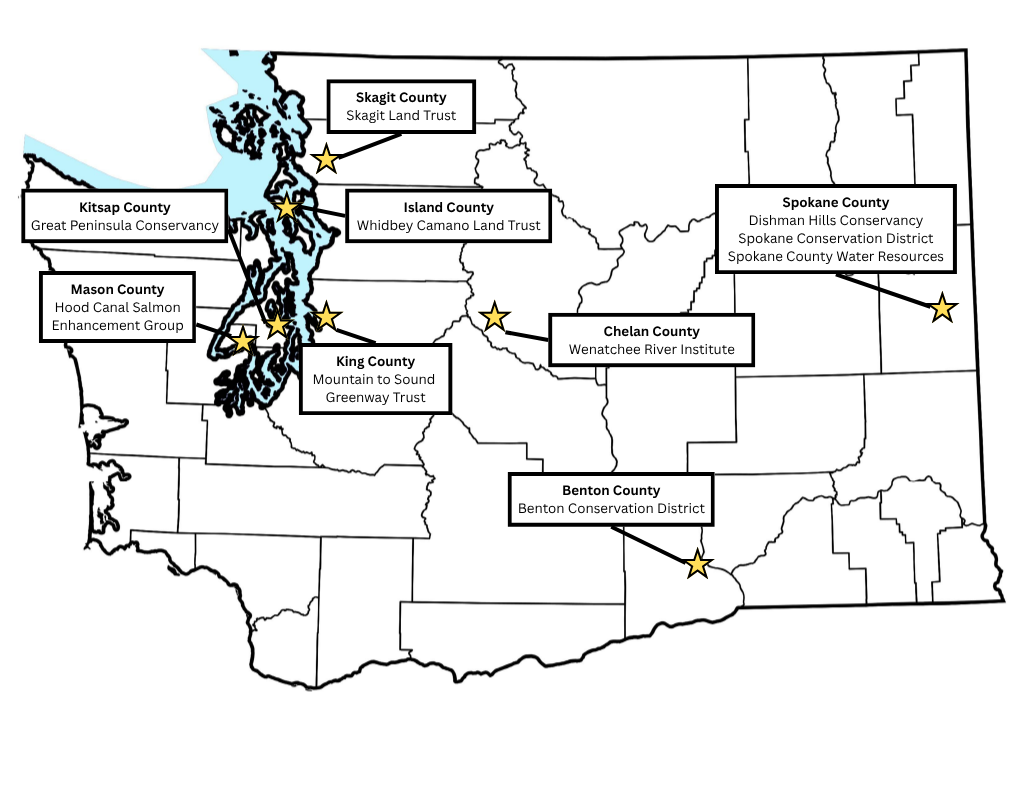
More information on each of the communities and partner organizations is available on our Partners page.
Refund policy
No refunds once the Canvas course space is accessed. This is regardless of the date. There is no need to access the Canvas course before October 6, 2026.
| Cancellation Date | Eligible Refund |
|---|---|
| Before September 22nd | $275 ($325 program fee minus a $50 processing fee) |
| September 22nd – October 6th | $235 ($325 program fee minus $90 processing fee) |
| After October 6th | No refund, but we offer a $75 registration fee for the 2027 – 2028 cohort if you choose to apply again. |